The Original On The Island – Now Fully Renovated

In 1974, the Mariner opened on a stretch of undeveloped Gulf beachside outside of Pensacola, Florida. Fifty years later, we are thrilled to announce we have undergone a complete renovation – with more exciting changes planned in the next year.

You will notice the following on your upcoming visit to The Mariner:

  • All new windows with clear views of our beautiful courtyard, the Gulf, our swimming pool and more.
  • All new sliding glass doors without hurricane shutter obstructions.
  • A fresh new paint scheme of a cool, crisp white with coastal blue entry doors.
  • Reinforced concrete throughout the complex, including new floor coatings on all walkways, balconies and patios.
  • Renovated public laundry areas.
  • Completely new landscaping design (in progress)
  • New hardscape and accent designs across the complex (in progress)
  • Parking lot refurbishment (in progress)

Additional Changes Forthcoming and/or Planned:

  • Elevator redesign set for Fall 2026
  • Public restroom redesign.
  • Community room redesign.
  • Office redesign.
  • North side (Ole River) redesign.

Not only has the community been hard at work, so have owners. Many of our owners have taken this year off to work on their own units, including renovations to their interior spaces.

We cannot wait to welcome you back to The Original on the Island!

The History of Perdido Key, Florida

In 1693, explorers had heard of a great mysterious body of water in-between Pensacola and Mobile, but they were unable to find the entrance. Even after locating the mouth of the bay, they were unable to find a waterway deep enough to sail through. According to legend, a ship led by cartographer, Carlos de Sigüenza y Góngora had been blown off course as he was again searching for the pass into the deep inland waters.

The ship was spotted by an Indian chief camped with his tribe at Bear Point. As the chief was walking by the water, he spotted Sigüenza attempting to reef his sails. He offered to guide Sigüenza and his men to a connecting deep-water channel from the Gulf of Mexico to the more tranquil bay. When the search party finally located the elusive bay, they called it Perdido, which in Spanish means “lost” or “hidden”.

Since then, the unincorporated community in Escambia County, Florida, called Perdido Key has been known to many as a unique community where one comes for seclusion, and to “get lost” on the barrier island among the snow-white sand beaches and emerald waters.

Perdido Key gained national attention during the great “Florida Land Boom” of the 1920s. Parcels of land warranted to veterans of the Spanish-American war, allowed the beachfront property to be bought cheaply. After World War 1, five prominent men at the time also bought 400 acres on Innerarity Point and Innerarity Island with a grand idea of developments. The five prominent men include Charles Christie, owner of a movie studio called “Christie Comedies”; Arthur Brisbane, an editor of the New York Journal Newspaper; Albert Shaw, a prominent writer; John H Perry, head of the American Press Association at the time; and Will Hays, known as the “Czar of Movies”. Even some of the biggest movie stars of the time, Douglas Fairbanks, and Mary Pickford, bought 40 acres on Innerarity Island to construct polo grounds, golf courses, and other developments.

In 1924, a developer from Pensacola, Theo Baars, Sr., began an attempt to build a seven-story hotel called “Hotel Escambia”. He bought 3 miles of beach property by using and buying warrants to purchase the cheap beachfront property. He envisioned the hotel as having a polo field, a stadium, tennis courts, and a cinema. As Sunny David says in her book, The Lost Bay that “Baars made a deal with the Escambia County Commissioners that if they would build a paved road from Warrington to Gulf Beach- which at that time was not separated from the mainland by the Intercoastal canal- then he would build a hotel.” He got his road.

But all their dreams began to end when in 1925, because of over-speculation, the Florida bubble began to burst. The great depression of 1929 finally put an end to the boom, and it would not come back for decades. One reminder of these times is the fact that the Intercoastal bridge at the east entrance to Perdido Bay is the “Theo Baars Bridge”

Circa 1933, Perdido Key had geographically become an island. Before then, Perdido was more of a small peninsula in West Pensacola. It was crossed by a large ditch that was narrow enough to jump across and sometimes filled with alligators. The ditch was improved and widened to become part of the Intercoastal Waterway in 1933. The island of Perdido Key is now about 16 miles long with almost 60% of it protected in federal or state parks.

On July 26, 1950, Army Private Rosamond Johnson, Jr was the first resident from Escambia County to die in the Korean War. He joined the military at age 15 and was fatally wounded after successfully carrying two wounded soldiers to safety and trying to rescue a third. The Gulf Beach area was renamed to honor its fallen hero at the suggestion of the Sunset Riding Club. The name Rosamond Johnson Beach remains today.

On the western side of Perdido Key, the Alabama Pass began construction. In the early days, the pass was dangerous to boats due to the strong tides and fast forming sand bars. In 1953, the Alabama Department of Conservation began to dredge the pass. In 1962, a small two-lane concrete bridge caused the state border to change. For Alabama constructing the bridge, Florida allowed Alabama to claim about three miles of the Key.

By 1970, development on the Key was at a constant rise. Initially known as the Gulf Beach Development Association, a small not-for-profit group that originated in the 1950s, officially incorporated as the Perdido Key Development Association, which later became known as the Perdido Key Association. Their main purpose was to promote welfare and orderly development, combat deterioration, lessen neighborhood tension, and maintain the natural beauty of the community known as Perdido Key, Florida.

In 1978, the National Park Service purchased over 1,000 acres of land on Perdido Key, from Rosamond Johnson Beach to Pensacola Pass. In the same year, Big Lagoon State Park was officially opened to the public. After growth in the 70s, came great devastation. In 1979, Hurricane Frederic was a category 4 storm that made landfall in nearby coastal Alabama. The Perdido Area was declared a disaster area, taking years to clean up and rebuild. The extensive damage swept away and destroyed structures. After the cleanup, came the time for rebuilding, luring developers to the area bringing change to Perdido Key.

The year 1985 queued some big moments for residents of Perdido Key. The year brought the beginning of the Perdido Key Area Chamber of Commerce, the rise of the iconic Eden Condominiums, the inauguration of the Frank Brown International Songwriters Festival, and the first Mullet Toss at the Flora-Bama. This was also the year that the infamous Perdido Key Beach Mouse was included on the list of Endangered Species.

Change persisted as Perdido Key continued to settle into its namesake in 1994. The Perdido Chamber requested that the US Board of Geographic Names change maps to read “Perdido Key” instead of Gulf Beach.

Devastation occurred when Hurricane Ivan, a Category 5 storm, made landfall on Perdido Key. Damage was observed along the coast from Baldwin County, Alabama to Santa Rosa County, Florida. The brunt of the storm hit Perdido Key, NAS Pensacola, Innerarity Point, and Warrington. Some subdivisions were destroyed with few key roads in Perdido only opening in late 2005, over a year after the storm hit. In Pensacola, the Interstate 10 Escambia Bay Bridge was heavily damaged, with as much as a quarter-mile collapsing into the bay. Destruction from Hurricane Ivan took many years to clean and rebuild, some of which were never restored.

Transformation did eventually come in the aftermath, showing Perdido Key’s never-ending resilience despite historical devastation. By 2015, Escambia County presented the Perdido Key Master Plan. The Master Plan created a vision for the future development and characteristics of Perdido Key. The Master plan, in addition to changes in zoning regulations, was set to make the Key more welcoming to shoppers, diners, pedestrians, and cyclists.

The vision today is much like in previous years, developing new ways for visitors and locals to experience the uniqueness of our precious barrier island. Within this past year, despite more destruction from Hurricane Sally in September 2020, several improvements have begun, including pedestrian crossing developments along Perdido Key Drive. Residents show support in public meetings for a roundabout at Perdido Key Drive and Johnson Beach Road and the multi-use path planned to stretch from the Theo Baars bridge all the way to the Flora-Bama

Reprinted from the Perdido Key Chamber of Commerce

Trying to catch Blue Angels practice? Here are seven unique viewing spots

Pensacola News Journal USA TODAY NETWORK

Published 4:38 p.m. CT June 9, 2022 | Updated 12:34 p.pm CT July 5, 2022

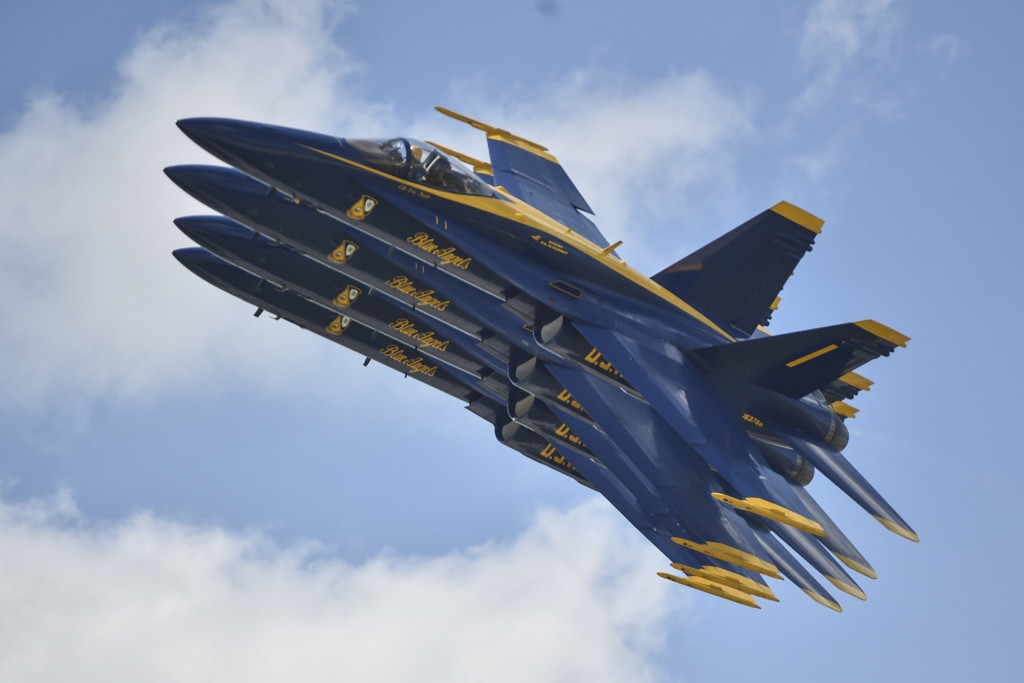
Public domain image of the Blue Angels.

1. Fort Pickens on Gulf Islands National Seashore

Located across from Pensacola Bay from Naval Air Station Pensacola on the tip of Santa Rosa Island, most any location around the historic fort offers great views of the Blue Angels practices. The area has become an increasingly popular spot to watch the flights. 

The fort can be reached by car from Pensacola Beach or via the National Park Service’s Pensacola Bay Cruise ferry boats, which are expected to start service on April 19.

2. Pensacola Bay

Most Pensacola-area charter boat companies offer trips centered around the Blue Angels practices.  The National Park Service’s Pensacola Bay Cruise ferry boats, which are expected to start service on April 19, will also be on the water during practice times throughout the busy summer season and offer a fun way to get around the area while seeing the Blue Angels and other local sites from the water. 

3. Navy Point

beach-side neighborhood park at the corner of Gibbs and Baublits is a popular location for many folks on the west side of Pensacola to watch the show. Navy Point is located north of Bayou Grande across from Naval Air Station Pensacola and residents routinely get great views of the blue and gold F/A-18 Hornets. 

4. Walmart parking lot at Blue Angel Parkway 

A Walmart parking lot might not sound like the ideal place to hang out, but for families who don’t make it to the base in time for the show, it is a good spot to see the jets fly. Heavy traffic, backup at the base gates and parking issues can mean a long wait to make it the flight line. The Walmart Supercenter, at 2951 S. Blue Angel Parkway, offers lots space and you can even take care of your grocery shopping when the show ends.

5. Blue Angel Practice Cruise

Finally, the latest and most unique way to watch the blue is aboard a Pensacola Bay Ferry. Every Tuesday and Wednesday, from 9:45 a.m. to noon, you can take a 1.5-hour cruise along Pensacola Bay with a covered rooftop view, seating and a climate-controlled cabin. The cruise departs from the downtown ferry landing, costs $25 a person and is free for kids two years old and under.

6. National Flight Academy

In 2019, the National Naval Aviation Museum opened a rooftop viewing area atop its National Flight Academy for Blue Angel practices. A maximum of 43 tickets to watch from the rooftop will be available each practice day for DoD ID card holders and their guests. Tickets can be purchased at the museum’s Giant Screen Theater ticket counter.

The museum offers three ticket packages including the $25 Alpha ticket, which includes seating and a bottle of water; the $35 Diamond ticket, which includes seating and a Chick-fil-A lunch with bottled water; and the $45 Delta ticket, which includes the lunch with the bottled water and an opportunity to fly the academy’s F-35 flight simulators for 45 minutes.

[STAY TUNED FOR THE 2026 SCHEDULE!]

*Indicates Blue Angels autograph sessions in the museum.

Vacation or Trip? A Helpful Guide for Parents

A humorous observation from a delightful blogger, M. Blazoned, about the distinct difference between a “vacation” and a “trip.” Hopefully, you will find her musings relatable and still want to travel with your family here to The Mariner. Teaser:

So, you’re headed out on a family vacation this summer. Great news! But are you sure? Are you sure it’s a vacation? You might want to think about that for a minute. Because a vacation is best described as time away from a job and/or the monotony and frustrations of day-to-day life, with the goal of relaxing and having fun. Not to be a super downer, but chances are, if you have kids (and they are coming with you), you aren’t going on a vacation at all. You’re going on what I like to call… a trip.

https://www.huffpost.com/entry/vacation-or-trip-a-helpful-guide-for-parents_b_7789310